Nucleotide
Nucleotides are the building blocks of nucleic acids and cellular energy.

Nucleotides are organic molecules composed of a nitrogenous base, a pentose sugar, and a phosphate. They serve as monomeric units of the nucleic acid polymers DNA and RNA, which are essential biomolecules within all life-forms on Earth. Nucleotides are obtained in the diet and are also synthesized from common nutrients by the liver.
- field
- Biochemistry, Molecular Biology
- known_for
- Monomeric units of DNA and RNA; cellular energy carriers (ATP, GTP, CTP, UTP); cell signaling (cAMP, cGMP); enzymatic cofactors
Lore & Background
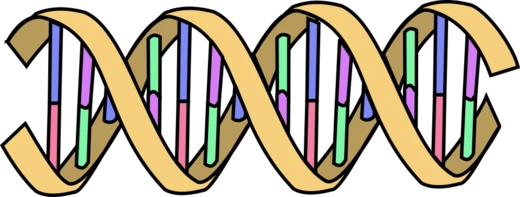
Nucleotides are composed of three subunit molecules: a nucleobase, a five-carbon sugar (ribose or deoxyribose), and a phosphate group consisting of one to three phosphates. The four nucleobases in DNA are guanine, adenine, cytosine, and thymine; in RNA, uracil is used in place of thymine. In nucleic acids, individual phosphate molecules repetitively connect the sugar-ring molecules in adjacent nucleotide monomers, creating a backbone strand for a single- or double helix. In a double helix, the two strands are oriented in opposite directions, permitting base pairing and complementarity essential for replicating or transcribing encoded information.
Reader's Guide
Nucleotides play a central role in metabolism at a fundamental, cellular level. They provide chemical energy in the form of nucleoside triphosphates (ATP, GTP, CTP, UTP) for many cellular functions, including amino acid, protein, and cell membrane synthesis, cell movement, and cell division. Nucleotides also participate in cell signaling (cGMP and cAMP) and are incorporated into important cofactors of enzymatic reactions (e.g., coenzyme A, FAD, FMN, NAD, and NADP+). In experimental biochemistry, nucleotides can be radiolabeled using radionuclides to yield radionucleotides. Additionally, 5-nucleotides are used as flavor enhancers to enhance umami taste, often in the form of a yeast extract. The synthesis of nucleotides can occur de novo or through salvage pathways, with the liver being the major organ of de novo synthesis of all four nucleotides.
Did You Know?
- Nucleotides are composed of three subunit molecules: a nucleobase, a five-carbon sugar, and a phosphate group.
- The four nucleobases in DNA are guanine, adenine, cytosine, and thymine; in RNA, uracil is used in place of thymine.
- Nucleotides provide chemical energy in the form of ATP, GTP, CTP, and UTP.
- 5-nucleotides are used as flavor enhancers to enhance umami taste, often in the form of a yeast extract.
More in Microbiology And Cell Biology 1-23
Spotted an error? Know more?
This is a living reference — every entry is fact-audited, and reader corrections feed straight into our audit queue. Suggest an edit · See this site's audit record