Frequently Asked Questions
The most-asked questions about microbiology and cell biology.
What is microbiology and cell biology, in plain terms?
Microbiology is the study of organisms too small to see with the naked eye — bacteria, viruses, fungi, protists — while cell biology zooms in on the internal machinery of all living cells. Together they cover everything from how a single bacterium divides to how a human neuron fires.
Who are the 'founding figures' everyone keeps mentioning?
Louis Pasteur and Robert Koch are the most-cited names for establishing germ theory and experimental proof of disease causation, while Robert Hooke's 1665 observation of cork cells is often called the field's origin moment. More recently, James Watson, Francis Crick, and Rosalind Franklin are household names for cracking the structure of DNA.
What's the difference between microbiology and cell biology?
Microbiology focuses on whole organisms that are microscopic, whereas cell biology examines the structures and processes inside any cell, whether it belongs to a bacterium or a human. In practice they overlap heavily, since understanding a microbe almost always means understanding its cells.
Where should a complete beginner start?
Most people recommend beginning with the basics of cell structure — membranes, organelles, and the central dogma of DNA to RNA to protein — before moving to specific microbes. A general biology textbook chapter on cells plus a short introduction to bacterial and viral life cycles is a solid on-ramp.
What is the 'central dogma' and why does it come up everywhere?
It is the principle that genetic information flows from DNA to RNA to protein, and it underpins nearly every topic in both fields. Virtually every technique in the lab — PCR, sequencing, gene editing — is built on manipulating that flow.
What are the major branches or sub-fields?
Common ones include bacteriology, virology, mycology, and phycology under the microbiology umbrella, plus molecular biology, structural biology, and cell signaling under cell biology. Immunology and bioinformatics sit at the intersection and are increasingly central.
What counts as the most 'iconic' discovery in the field?
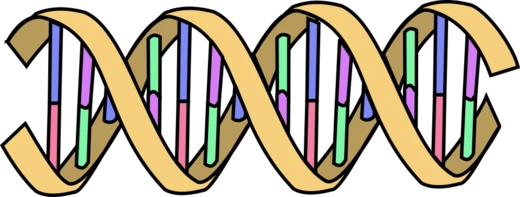
The 1953 elucidation of DNA's double-helix structure is the most frequently cited landmark, because it gave the field a unifying molecular language. The 1928 discovery of penicillin by Alexander Fleming is another milestone fans often point to as the moment microbiology went from academic curiosity to life-saving medicine.
What organisms do people in the field actually work with the most?
Escherichia coli and Saccharomyces cerevisiae (baker's yeast) are the two workhorse model organisms used in virtually every lab. Bacteriophages, Mycobacterium tuberculosis, and human cell lines like HeLa round out the most-studied roster.
What are some key lab techniques every fan should know the names of?
PCR for amplifying DNA, gel electrophoresis for separating molecules by size, and fluorescence microscopy for visualizing tagged structures inside living cells are the big three. CRISPR-Cas9 gene editing has become the fourth name that shows up in almost every modern discussion.
What are some recent 'big moments' that got the community excited?
The 2012 Nobel-recognized CRISPR gene-editing toolkit reshaped how researchers modify genomes, and the 2020s saw rapid mRNA vaccine development that put virology and cell biology front-and-center in public life. Synthetic biology efforts to build minimal genomes and engineer new metabolic pathways continue to draw huge attention.